2026 a_l__o_t_design® Studio722
Cargo robot
Cargo robot
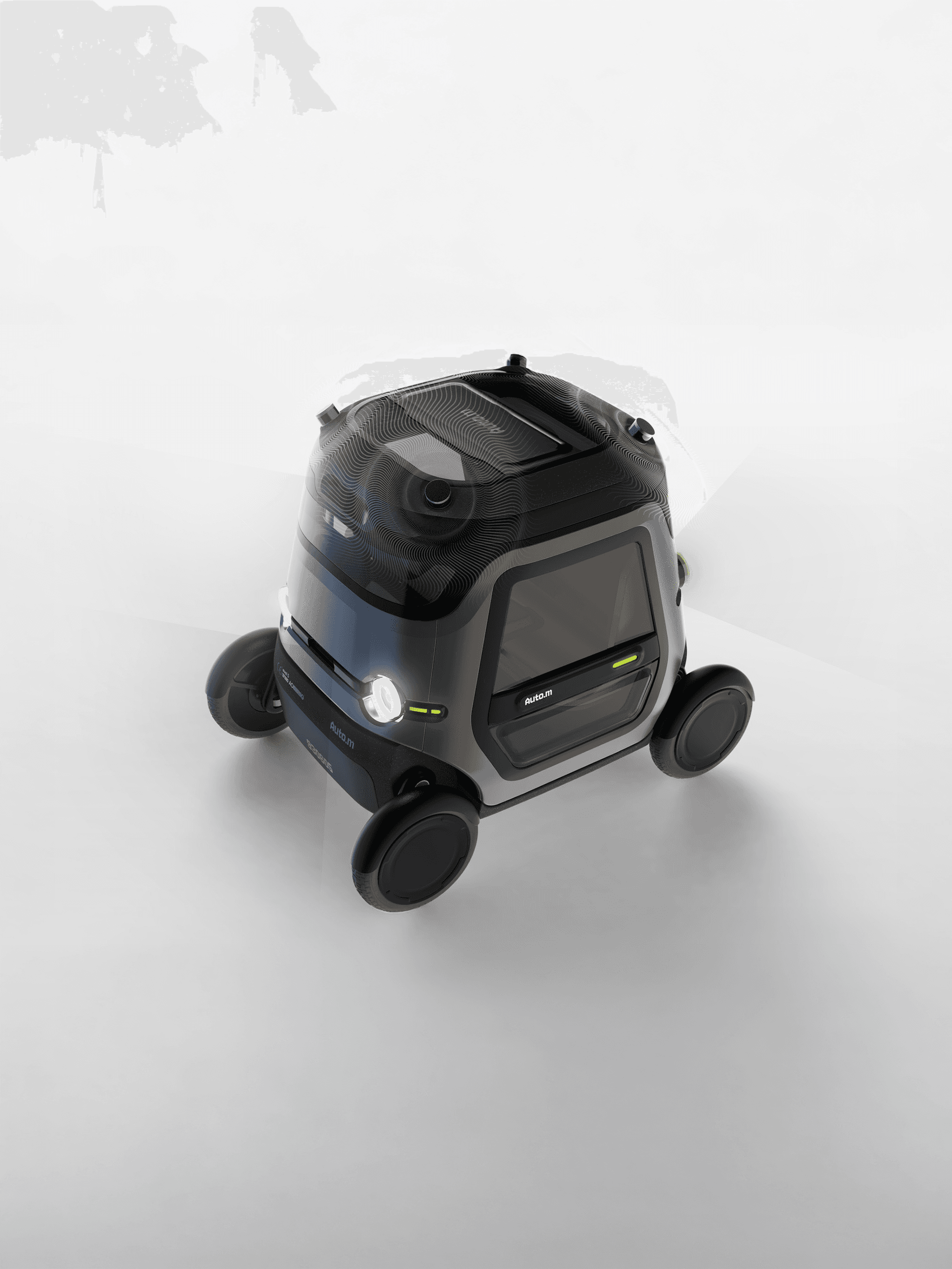
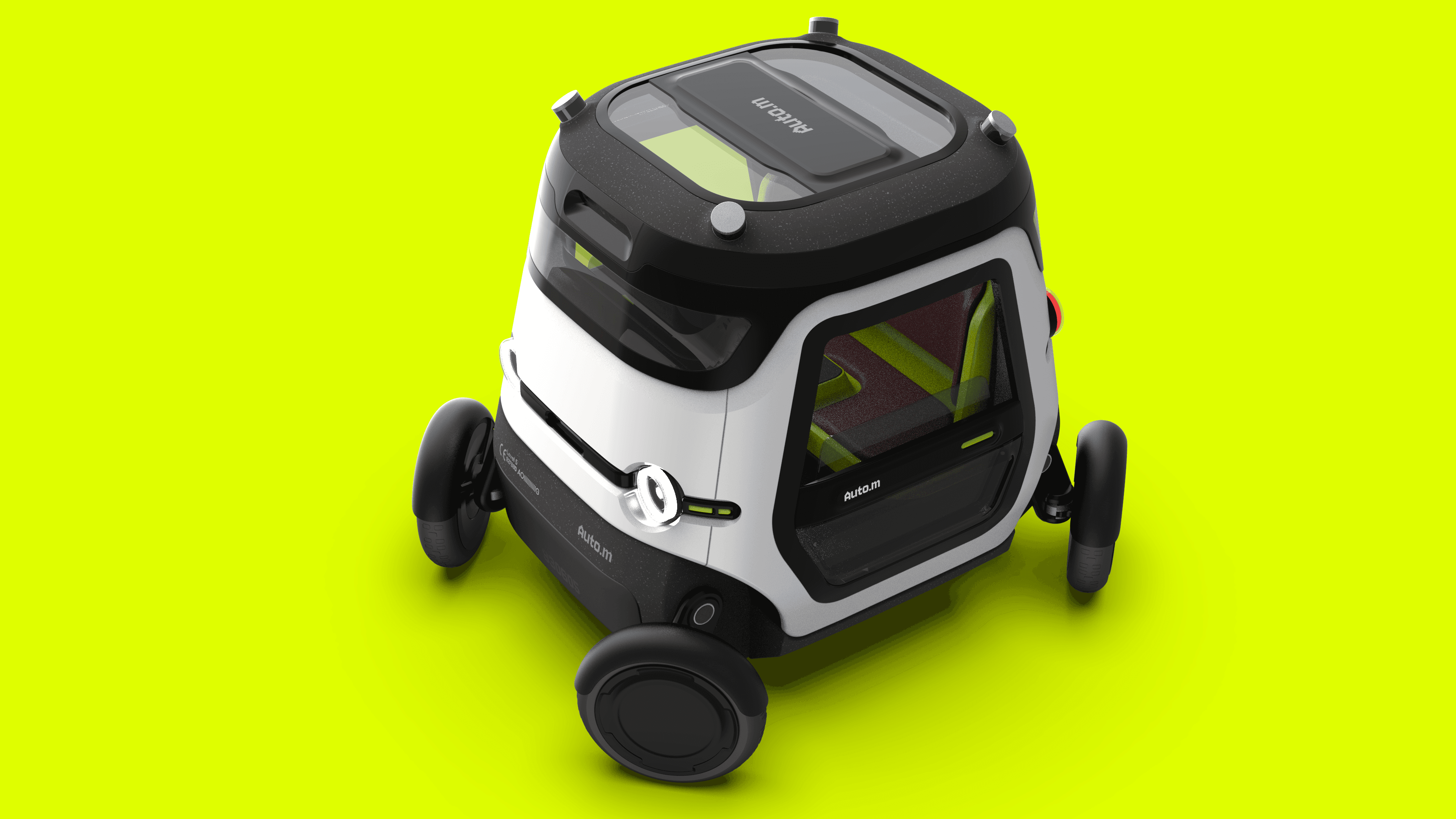
R-Cargo is a modular autonomous logistics platform designed to automate material transport across warehouses and industrial campuses. Developed through multiple design iterations, it combines advanced perception, scalable architecture, and industrial-grade reliability to operate safely alongside people and equipment, 24/7.
Year
Year
Cargo & delivery robot / 2025
Industry
Industry
Warehouse & Logistics Automation
Scope of work
Scope of work
/
Industrial and Product Design
/
Robotics Design
Robotics Design
Robotics Design
Timeline
Timeline
1.5 years
1.5 years
Purpose-Built Industrial Mobility
R-Cargo is the second-generation autonomous cargo platform developed for Robot.com, purpose-built to automate material transport across complex industrial environments. Designed from the ground up for reliability, modularity, and continuous operation, it bridges indoor warehouses and outdoor logistics with a single autonomous platform.
Originally designed for Intel and GXO warehouse operations, R-Cargo was engineered to transport high-value semiconductor components while safely navigating alongside forklifts and warehouse personnel. Every aspect of its industrial design balances payload capacity, durability, safety, and manufacturability, creating a platform capable of operating in demanding logistics environments where precision, uptime, and reliability are essential.


Autonomy Through Sensor Fusion
The robot integrates a comprehensive perception architecture that enables safe navigation, environmental awareness, and reliable autonomous operation across dynamic industrial spaces.strengthening relationships with existing partners.
Its autonomous system combines a Livox 3D LiDAR, front-facing 2D LiDAR, Intel RealSense depth sensing, multiple navigation cameras, laser safety scanners, internal cargo cameras, and 360° environmental vision. Powered by an NVIDIA AGX computing platform with advanced 5G connectivity, the robot continuously understands its surroundings while explorer lights and a full 360° safety beacon allow reliable operation day and night.


Designed For Every Mission
Flexibility became a core design principle, allowing a single robotic platform to adapt to multiple industries, workflows, and operational requirements.
R-Cargo introduces a modular architecture with interchangeable cargo modules that can be configured for different customers and applications without redesigning the base vehicle. Whether transporting semiconductor wafers, warehouse inventory, industrial equipment, or future payloads, the platform evolves through modular attachments rather than entirely new products. With a 75-liter payload compartment, hybrid indoor/outdoor navigation, self-charging capability, and up to eight hours of runtime, it was designed for continuous 24/7 deployment.


From Concept To Production
The project evolved through multiple generations of industrial design, engineering validation, and rapid prototyping before reaching its production-ready architecture.
Development began with an experimental chassis known internally as "DummyBot," allowing the team to validate packaging, proportions, and mobility before engineering development. Following the first MVP, the platform returned to the design team for multiple refinement cycles, where ergonomics, manufacturability, structural architecture, serviceability, and user interaction were continuously improved. This iterative workflow established the foundation for a scalable robotic platform ready for real-world industrial deployment.

R-Cargo demonstrates how industrial design can drive the development of autonomous logistics platforms by integrating engineering, manufacturing, and user experience into a single product vision. More than a warehouse robot, it establishes a scalable foundation for future industrial mobility—one that can rapidly evolve through modular hardware, continuous software improvements, and real-world operational feedback.
Head designer
Head designer
Alejandro Otálora
Alejandro Otálora
Team
Team
Design Team: Joell Martínez, Erika Ospina, Miguel Sierra. Engineering Team: Natalia Pinilla, Andrés Rengifo, Leonardo Correa, Miguel Jiménez, José Logreira, Dany Cáceres, Andrés Martínez.
Company
Company
robot.com / kiwibot
robot.com / kiwibot
robot.com / kiwibot
2026 alot_design® Studio722
Let’s design.
Tell us about your vision—whether you're looking to develop next-generation mobility, autonomous robotics, or market-ready industrial products.
Let’s design.
Tell us about your vision—whether you're looking to develop next-generation mobility, autonomous robotics, or market-ready industrial products.
2026 alot_design® Studio722
Let’s design.
Tell us about your vision—whether you're looking to develop next-generation mobility, autonomous robotics, or market-ready industrial products.