2026 a_l__o_t_design® Studio722
2026 a_l__o_t_design® Studio722
2026 a_l__o_t_design® Studio722

Kiwibot classic
Kiwibot classic
Kiwibot Classic marked the transition from an early proof of concept into the company's first scalable delivery robot. Developed between California and Shenzhen during Kiwibot's earliest days, it established the product architecture, design language, and technical direction that would shape every generation that followed.
Kiwibot Classic marked the transition from an early proof of concept into the company's first scalable delivery robot. Developed between California and Shenzhen during Kiwibot's earliest days, it established the product architecture, design language, and technical direction that would shape every generation that followed.
Kiwibot Classic marked the transition from an early proof of concept into the company's first scalable delivery robot. Developed between California and Shenzhen during Kiwibot's earliest days, it established the product architecture, design language, and technical direction that would shape every generation that followed.

Year
Year
Delivery Robot / 2018
Delivery Robot / 2018
Industry
Industry
Logistics & Supply Chain
Logistics & Supply Chain
Scope of work
Scope of work
/
03 - Industrial Product Design
03 - Industrial Product Design
03 - Industrial Product Design
/
02 - Robotics & Autonomous Systems
02 - Robotics & Autonomous Systems
02 - Robotics & Autonomous Systems
/
05 - Engineering & Prototyping
05 - Engineering & Prototyping
05 - Engineering & Prototyping
Timeline
Timeline
2 years
2 years
From Prototype
Kiwibot began as a simple remotely operated box carrying food with a camera and a smartphone. As the company grew, the challenge became transforming that experimental prototype into a reliable robotic product capable of operating in real environments.
Kiwibot began as a simple remotely operated box carrying food with a camera and a smartphone. As the company grew, the challenge became transforming that experimental prototype into a reliable robotic product capable of operating in real environments.
In 2017, Kiwibot consisted of a very small team working under constant technical uncertainty. Every iteration revealed new engineering challenges, from structural failures to manufacturing limitations. The goal wasn't perfection—it was proving autonomous delivery could become a real product while continuously learning from every prototype built and tested.
In 2017, Kiwibot consisted of a very small team working under constant technical uncertainty. Every iteration revealed new engineering challenges, from structural failures to manufacturing limitations. The goal wasn't perfection—it was proving autonomous delivery could become a real product while continuously learning from every prototype built and tested.


Designing Under Constraints
With limited resources and no dedicated mechanical engineering team, industrial design became deeply involved in every aspect of product development, from mechanical architecture to manufacturing and assembly.
With limited resources and no dedicated mechanical engineering team, industrial design became deeply involved in every aspect of product development, from mechanical architecture to manufacturing and assembly.
Working between California and Shenzhen, I designed mechanical components, production assemblies, and product architecture while collaborating directly with suppliers and rapid prototyping workshops. Early carbon fiber structures, 3D-printed mechanical parts, and countless iterations allowed us to quickly solve problems despite limited engineering resources and extremely aggressive development timelines.
Working between California and Shenzhen, I designed mechanical components, production assemblies, and product architecture while collaborating directly with suppliers and rapid prototyping workshops. Early carbon fiber structures, 3D-printed mechanical parts, and countless iterations allowed us to quickly solve problems despite limited engineering resources and extremely aggressive development timelines.


Learning Through Iteration
Every prototype became an engineering experiment. Rather than avoiding failures, the project embraced rapid iteration to validate ideas, improve reliability, and continuously evolve the robot through real-world testing.
Every prototype became an engineering experiment. Rather than avoiding failures, the project embraced rapid iteration to validate ideas, improve reliability, and continuously evolve the robot through real-world testing.
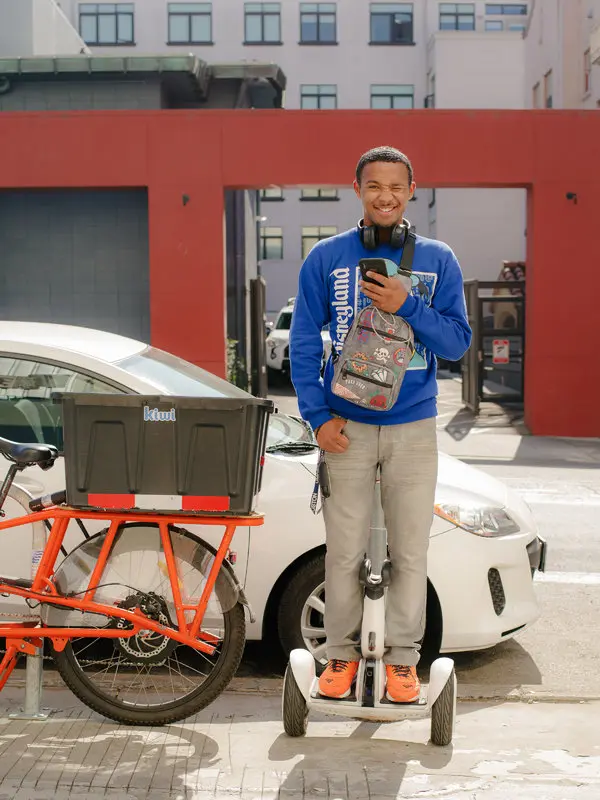
The transition from handmade prototypes to Kiwibot Classic introduced a completely redesigned chassis with stronger structures, improved manufacturability, and better serviceability. Although 3D-printed components frequently failed and mechanical tolerances remained challenging, each deployment generated valuable operational insights that directly influenced future generations of the platform.
The transition from handmade prototypes to Kiwibot Classic introduced a completely redesigned chassis with stronger structures, improved manufacturability, and better serviceability. Although 3D-printed components frequently failed and mechanical tolerances remained challenging, each deployment generated valuable operational insights that directly influenced future generations of the platform.


Building Company Foundations
Kiwibot Classic was more than a delivery robot—it became the product that helped establish the company's credibility during its earliest stage of growth.
Kiwibot Classic was more than a delivery robot—it became the product that helped establish the company's credibility during its earliest stage of growth.
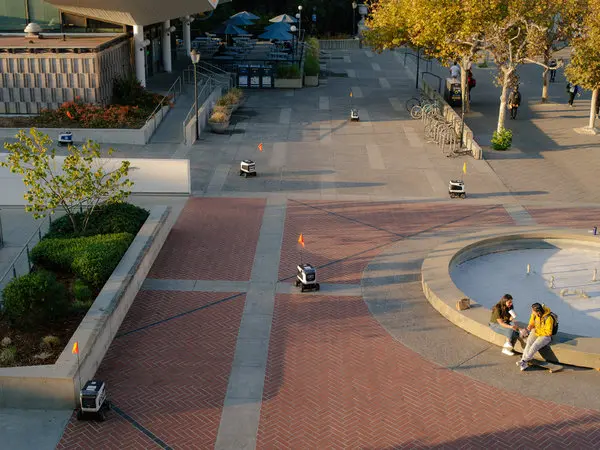
The platform enabled the first pilot programs across university campuses, demonstrated continuous product evolution, and provided a compelling vision for investors. More importantly, it validated technical hypotheses, opened new commercial opportunities, and created the operational experience that ultimately shaped the architecture of Kiwibot 4 and every platform developed afterward.
The platform enabled the first pilot programs across university campuses, demonstrated continuous product evolution, and provided a compelling vision for investors. More importantly, it validated technical hypotheses, opened new commercial opportunities, and created the operational experience that ultimately shaped the architecture of Kiwibot 4 and every platform developed afterward.
Kiwibot Classic represents the moment when an ambitious startup idea became a tangible robotics product. It reflects the resilience, experimentation, and multidisciplinary collaboration required to build autonomous technology from the ground up. Although technically simple compared to later generations, Kiwibot Classic established the DNA of the company. Built through relentless iteration across California and Shenzhen, it proved that industrial design could drive engineering decisions, accelerate product development, and help secure the confidence needed to grow the company. Every robot that followed traces its origins back to the lessons learned during this project.
Kiwibot Classic represents the moment when an ambitious startup idea became a tangible robotics product. It reflects the resilience, experimentation, and multidisciplinary collaboration required to build autonomous technology from the ground up. Although technically simple compared to later generations, Kiwibot Classic established the DNA of the company. Built through relentless iteration across California and Shenzhen, it proved that industrial design could drive engineering decisions, accelerate product development, and help secure the confidence needed to grow the company. Every robot that followed traces its origins back to the lessons learned during this project.
Kiwibot Classic represents the moment when an ambitious startup idea became a tangible robotics product. It reflects the resilience, experimentation, and multidisciplinary collaboration required to build autonomous technology from the ground up. Although technically simple compared to later generations, Kiwibot Classic established the DNA of the company. Built through relentless iteration across California and Shenzhen, it proved that industrial design could drive engineering decisions, accelerate product development, and help secure the confidence needed to grow the company. Every robot that followed traces its origins back to the lessons learned during this project.
Head designer
Head designer
Alejandro Otálora
Alejandro Otálora
Team
Team
Felipe Chavez, Sergio Pachon, Jason Oviedo, Sasha Iatsenia, Jorge Vargas, Natalia Pinilla, Kelly Moreno, Paula Puertas, Juan Jurado, Juan Galvis, David Cardozo.
Felipe Chavez, Sergio Pachon, Jason Oviedo, Sasha Iatsenia, Jorge Vargas, Natalia Pinilla, Kelly Moreno, Paula Puertas, Juan Jurado, Juan Galvis, David Cardozo.
Company
Company
Kiwi campus
Kiwi campus
Kiwi campus









2026 alot_design® Studio722
Let’s design.
Tell us about your vision—whether you're looking to develop next-generation mobility, autonomous robotics, or market-ready industrial products.


Let’s design.
Tell us about your vision—whether you're looking to develop next-generation mobility, autonomous robotics, or market-ready industrial products.
2026 alot_design® Studio722
Let’s design.
Tell us about your vision—whether you're looking to develop next-generation mobility, autonomous robotics, or market-ready industrial products.