2026 a_l__o_t_design® Studio722
2026 a_l__o_t_design® Studio722
2026 a_l__o_t_design® Studio722

Delivery and advertising concept robot
Delivery and advertising concept robot
Kiwibot M5 redefines autonomous delivery through a robot designed for long-term scalability. Every decision—from architecture to manufacturing—focused on lowering operational costs, increasing reliability, and creating a modular platform capable of supporting multiple autonomous services beyond last-mile delivery.
Kiwibot M5 redefines autonomous delivery through a robot designed for long-term scalability. Every decision—from architecture to manufacturing—focused on lowering operational costs, increasing reliability, and creating a modular platform capable of supporting multiple autonomous services beyond last-mile delivery.
Kiwibot M5 redefines autonomous delivery through a robot designed for long-term scalability. Every decision—from architecture to manufacturing—focused on lowering operational costs, increasing reliability, and creating a modular platform capable of supporting multiple autonomous services beyond last-mile delivery.

Year
Year
Concept Delivery Robot / 2024
Concept Delivery Robot / 2024
Industry
Industry
Robotics, advertising, autonomy
Robotics, advertising, autonomy
Scope of work
Scope of work
/
02 - Robotics & Autonomous Systems
02 - Robotics & Autonomous Systems
02 - Robotics & Autonomous Systems
/
03 - Industrial Product Design
03 - Industrial Product Design
03 - Industrial Product Design
/
05 - Engineering & Prototyping
05 - Engineering & Prototyping
05 - Engineering & Prototyping
Timeline
Timeline
8 months
8 months
Designing for Scale
The M5 was designed to solve the next challenge in autonomous robotics: building a platform that could scale from hundreds to thousands of units while reducing manufacturing complexity and total cost of ownership.
The M5 was designed to solve the next challenge in autonomous robotics: building a platform that could scale from hundreds to thousands of units while reducing manufacturing complexity and total cost of ownership.
Rather than redesigning a delivery robot, we rethought the entire product architecture. The platform prioritizes modular components, simplified assembly, standardized manufacturing, and easier servicing. Every design decision contributes to lower production costs, faster maintenance, higher reliability, and a product capable of evolving with future business opportunities and robotic applications.
Rather than redesigning a delivery robot, we rethought the entire product architecture. The platform prioritizes modular components, simplified assembly, standardized manufacturing, and easier servicing. Every design decision contributes to lower production costs, faster maintenance, higher reliability, and a product capable of evolving with future business opportunities and robotic applications.


Built for Reliability
Reliable autonomy depends on more than software. The physical product must perform consistently across changing environments while minimizing maintenance, downtime, and operational intervention.
Reliable autonomy depends on more than software. The physical product must perform consistently across changing environments while minimizing maintenance, downtime, and operational intervention.
The robot integrates a robust sensor architecture combining LiDAR, multiple cameras, LED communication, and a modular electronics layout designed for continuous operation. Improved waterproofing, simplified service access, wireless charging, and durable construction increase uptime while reducing maintenance requirements, enabling reliable autonomous deliveries with fewer operational resources.
The robot integrates a robust sensor architecture combining LiDAR, multiple cameras, LED communication, and a modular electronics layout designed for continuous operation. Improved waterproofing, simplified service access, wireless charging, and durable construction increase uptime while reducing maintenance requirements, enabling reliable autonomous deliveries with fewer operational resources.
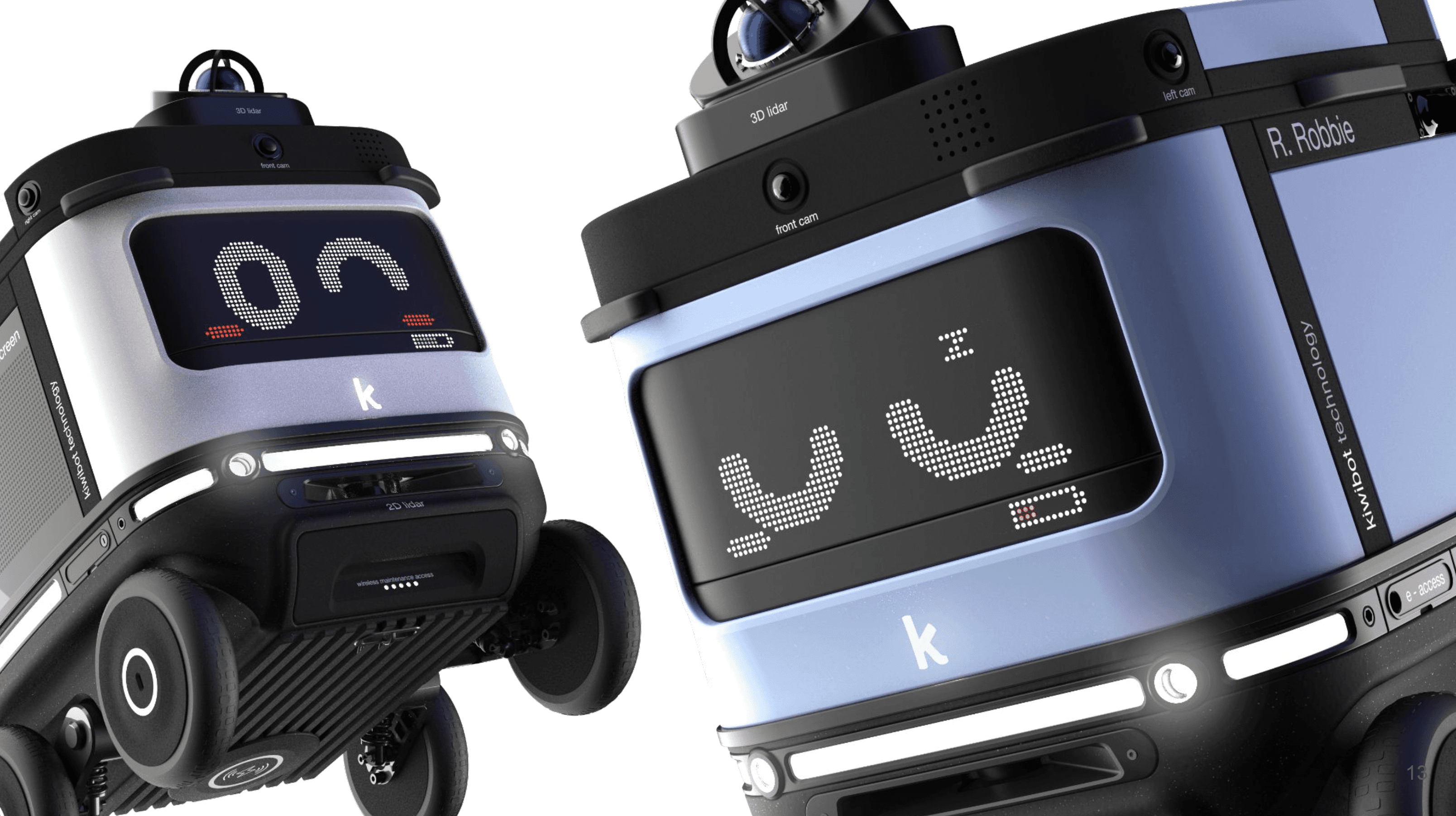


Modular by Design
A robotic platform should adapt as markets evolve. M5 was conceived as a flexible product architecture capable of supporting multiple business models without redesigning the core vehicle.
A robotic platform should adapt as markets evolve. M5 was conceived as a flexible product architecture capable of supporting multiple business models without redesigning the core vehicle.
The modular platform supports interchangeable cargo systems, robotic advertising, data collection, mapping, and future autonomous services through a shared hardware architecture. This flexibility extends product lifespan, accelerates development of new applications, and enables the same robotic platform to address diverse commercial opportunities while maintaining manufacturing efficiency.
The modular platform supports interchangeable cargo systems, robotic advertising, data collection, mapping, and future autonomous services through a shared hardware architecture. This flexibility extends product lifespan, accelerates development of new applications, and enables the same robotic platform to address diverse commercial opportunities while maintaining manufacturing efficiency.


Beyond Delivery
The project was never only about building a better delivery robot. It established a scalable robotics platform capable of supporting the company's long-term vision across logistics, automation, urban data, and autonomous services.
The project was never only about building a better delivery robot. It established a scalable robotics platform capable of supporting the company's long-term vision across logistics, automation, urban data, and autonomous services.
By combining industrial design, engineering collaboration, manufacturing strategy, and operational experience gathered from millions of real-world deliveries, M5 represents a shift from designing individual robots to creating an adaptable robotics ecosystem. The platform balances user experience, technical performance, and business scalability, providing a foundation for the next generation of autonomous products.
By combining industrial design, engineering collaboration, manufacturing strategy, and operational experience gathered from millions of real-world deliveries, M5 represents a shift from designing individual robots to creating an adaptable robotics ecosystem. The platform balances user experience, technical performance, and business scalability, providing a foundation for the next generation of autonomous products.

Although Kiwibot M5 never reached mass production, it remains one of the most ambitious and technically refined projects of my career. Its success was driven by an exceptional collaboration between our industrial design and engineering teams, working closely with Wistron's engineering and manufacturing experts in Taiwan to develop a product ready for large-scale production. The project demonstrated how multidisciplinary collaboration can elevate both design quality and technical execution, establishing a benchmark for future autonomous robotics platforms.
Although Kiwibot M5 never reached mass production, it remains one of the most ambitious and technically refined projects of my career. Its success was driven by an exceptional collaboration between our industrial design and engineering teams, working closely with Wistron's engineering and manufacturing experts in Taiwan to develop a product ready for large-scale production. The project demonstrated how multidisciplinary collaboration can elevate both design quality and technical execution, establishing a benchmark for future autonomous robotics platforms.
Although Kiwibot M5 never reached mass production, it remains one of the most ambitious and technically refined projects of my career. Its success was driven by an exceptional collaboration between our industrial design and engineering teams, working closely with Wistron's engineering and manufacturing experts in Taiwan to develop a product ready for large-scale production. The project demonstrated how multidisciplinary collaboration can elevate both design quality and technical execution, establishing a benchmark for future autonomous robotics platforms.
Head designer
Head designer
Alejandro Otálora
Alejandro Otálora
Team
Team
Direction Team: Felipe Chávez, Natalia Valderrama, David Rodríguez, Sergio Pachón. Design Team: Joell Martínez, Erika Ospina, Miguel Sierra. Engineering Team: Natalia Pinilla, Andrés Rengifo, Leonardo Correa, Miguel Jiménez, José Logreira, Dany Cáceres, Andrés Martínez. co developed ith wistrom, taiwan.
Direction Team: Felipe Chávez, Natalia Valderrama, David Rodríguez, Sergio Pachón. Design Team: Joell Martínez, Erika Ospina, Miguel Sierra. Engineering Team: Natalia Pinilla, Andrés Rengifo, Leonardo Correa, Miguel Jiménez, José Logreira, Dany Cáceres, Andrés Martínez. co developed ith wistrom, taiwan.
Company
Company
kiwibot
kiwibot
kiwibot









2026 alot_design® Studio722
Let’s design.
Tell us about your vision—whether you're looking to develop next-generation mobility, autonomous robotics, or market-ready industrial products.


Let’s design.
Tell us about your vision—whether you're looking to develop next-generation mobility, autonomous robotics, or market-ready industrial products.
2026 alot_design® Studio722
Let’s design.
Tell us about your vision—whether you're looking to develop next-generation mobility, autonomous robotics, or market-ready industrial products.