2026 a_l__o_t_design® Studio722
2026 a_l__o_t_design® Studio722
2026 a_l__o_t_design® Studio722

One platform, many jobs.
One platform, many jobs.
R-noid is a humanoid robot that assists kitchens, packs lines, picks orders and folds linens in five job ready roles on one platform, working on your floor in weeks.
R-noid is a humanoid robot that assists kitchens, packs lines, picks orders and folds linens in five job ready roles on one platform, working on your floor in weeks.
R-noid is a humanoid robot that assists kitchens, packs lines, picks orders and folds linens in five job ready roles on one platform, working on your floor in weeks.

Year
Year
Humanoid robot / 2026
Humanoid robot / 2026
Industry
Industry
Robotics, Industrial, logistics, Healthcare, Food Services, Lodging
Robotics, Industrial, logistics, Healthcare, Food Services, Lodging
Scope of work
Scope of work
/
02 - Robotics & Autonomous Systems
02 - Robotics & Autonomous Systems
02 - Robotics & Autonomous Systems
/
05 - Engineering & Prototyping
05 - Engineering & Prototyping
05 - Engineering & Prototyping
/
03 - Industrial Product Design
03 - Industrial Product Design
03 - Industrial Product Design
Timeline
Timeline
5 months
5 months
Designed in Tokyo
Since 2017, I have led Kiwibot's industrial design, redefining how people perceive and interact with autonomous robots.
Since 2017, I have led Kiwibot's industrial design, redefining how people perceive and interact with autonomous robots.
I led the end-to-end design process, collaborating across industrial design, UX, interaction, sound, and engineering. Together with Yukai Engineering in Tokyo, we combined emotionally driven design with autonomous robotics to create a more expressive, human-centered robot that strengthens emotional connections without compromising functionality.
I led the end-to-end design process, collaborating across industrial design, UX, interaction, sound, and engineering. Together with Yukai Engineering in Tokyo, we combined emotionally driven design with autonomous robotics to create a more expressive, human-centered robot that strengthens emotional connections without compromising functionality.


New Brand Language, New Design Approach
This vision led to the development of a completely new design language.
This vision led to the development of a completely new design language.
Rather than evolving our existing products, I reimagined Kiwibot through a new design language focused on expression, personality, and human-centered interaction. An expressive head display, AI-driven personalities, and a modular personalization system allow each robot to adapt across brands, industries, and experiences. The result is a versatile platform that builds stronger emotional connections while setting a new standard for human-centered AI robotics.
Rather than evolving our existing products, I reimagined Kiwibot through a new design language focused on expression, personality, and human-centered interaction. An expressive head display, AI-driven personalities, and a modular personalization system allow each robot to adapt across brands, industries, and experiences. The result is a versatile platform that builds stronger emotional connections while setting a new standard for human-centered AI robotics.


One platform many jobs
At its core, this project redefines robotics by combining advanced AI with human-centered design. Rather than another humanoid robot, it establishes a scalable platform where intelligence, emotion, and functionality create meaningful real-world interactions.
At its core, this project redefines robotics by combining advanced AI with human-centered design. Rather than another humanoid robot, it establishes a scalable platform where intelligence, emotion, and functionality create meaningful real-world interactions.
Leveraging the Astribot platform and advanced AI, I collaborated with MOSTA and partners including Physical Intelligence, NVIDIA, Field AI, Yukai Engineering, and Formic to create a scalable robotics platform that learns, evolves, and automates tasks across multiple industries, redefining human-robot collaboration.
Leveraging the Astribot platform and advanced AI, I collaborated with MOSTA and partners including Physical Intelligence, NVIDIA, Field AI, Yukai Engineering, and Formic to create a scalable robotics platform that learns, evolves, and automates tasks across multiple industries, redefining human-robot collaboration.


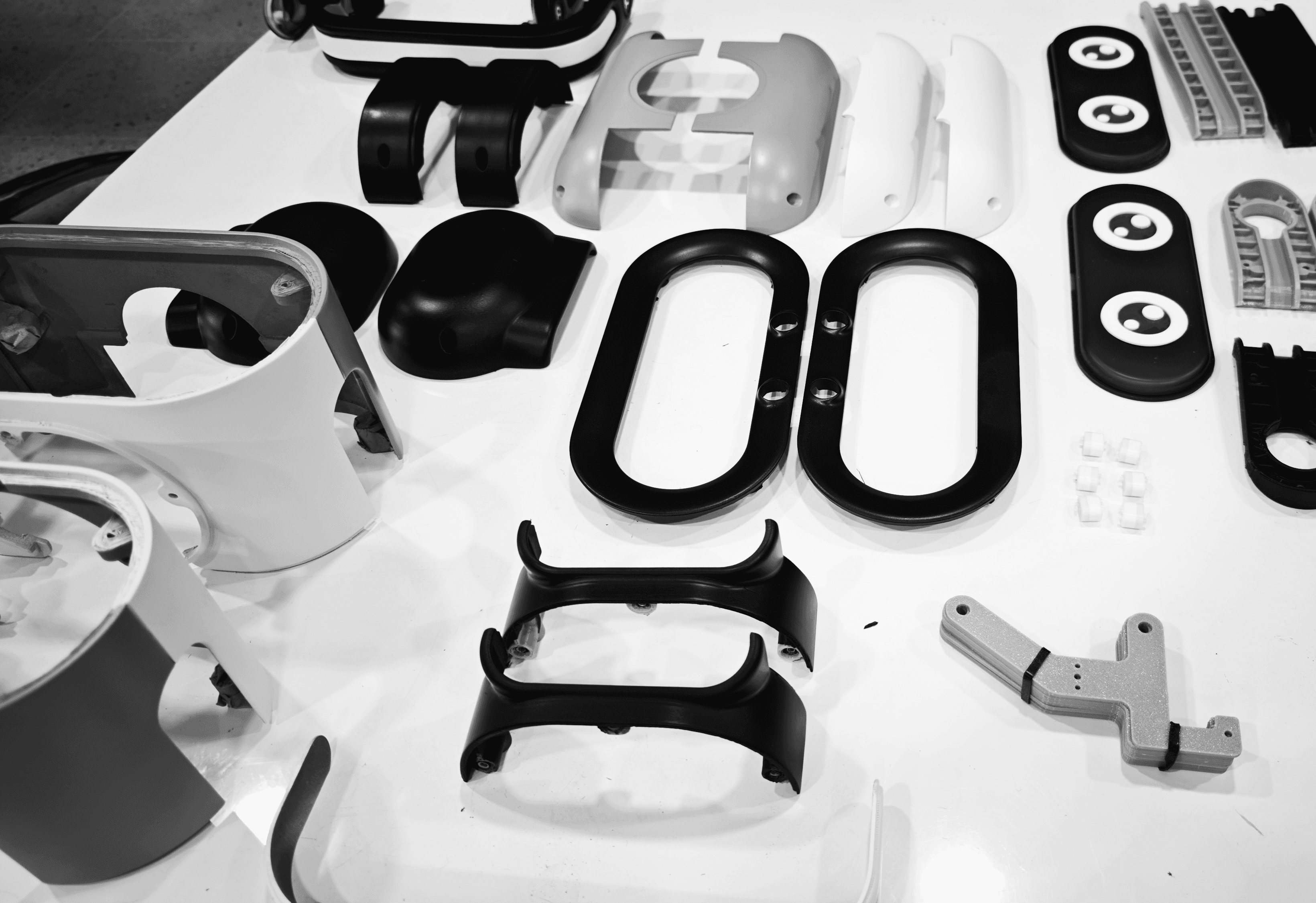

Shaping the Future of Robotics
R-Noid is a new generation of AI robotics built on the Astribot platform and developed with Physical Intelligence, NVIDIA, Field AI, Yukai Engineering, Formic, and MOSTA.
R-Noid is a new generation of AI robotics built on the Astribot platform and developed with Physical Intelligence, NVIDIA, Field AI, Yukai Engineering, Formic, and MOSTA.

In collaboration with MOSTA Engineering, Astribot, Physical Intelligence, NVIDIA, Field AI, Yukai Engineering, and Formic. Together, we set out to create one of the world's most versatile and beautifully designed robots—combining advanced AI, human-centered design, and world-class engineering to shape the future of intelligent robotics.
In collaboration with MOSTA Engineering, Astribot, Physical Intelligence, NVIDIA, Field AI, Yukai Engineering, and Formic. Together, we set out to create one of the world's most versatile and beautifully designed robots—combining advanced AI, human-centered design, and world-class engineering to shape the future of intelligent robotics.
In collaboration with MOSTA Engineering, Astribot, Physical Intelligence, NVIDIA, Field AI, Yukai Engineering, and Formic. Together, we set out to create one of the world's most versatile and beautifully designed robots—combining advanced AI, human-centered design, and world-class engineering to shape the future of intelligent robotics.
Head designer
Head designer
Alejandro Otálora
Alejandro Otálora
Team
Team
Direction team: Felipe Chavez, Judah Longgrear, Natalia Valderrama, David Rodriguez, Sergio Pachon. Design team: Joell Martinez, Erika Ospina, Johan Ceballos. Engeering team: Juan Galvis, Natalia Pinilla, Andres Rengifo, Leonardo Correa, Miguel Jimenez, Jose Logreira, Dany Caceres, Andres Martinez, Daniel Usuga. Product Team: Carlos Oliveros, Fernando Ramos, Miguel Rengifo.
Direction team: Felipe Chavez, Judah Longgrear, Natalia Valderrama, David Rodriguez, Sergio Pachon. Design team: Joell Martinez, Erika Ospina, Johan Ceballos. Engeering team: Juan Galvis, Natalia Pinilla, Andres Rengifo, Leonardo Correa, Miguel Jimenez, Jose Logreira, Dany Caceres, Andres Martinez, Daniel Usuga. Product Team: Carlos Oliveros, Fernando Ramos, Miguel Rengifo.
Company
Company
robot.com
robot.com
robot.com









2026 alot_design® Studio722
Let’s design.
Tell us about your vision—whether you're looking to develop next-generation mobility, autonomous robotics, or market-ready industrial products.


Let’s design.
Tell us about your vision—whether you're looking to develop next-generation mobility, autonomous robotics, or market-ready industrial products.
2026 alot_design® Studio722
Let’s design.
Tell us about your vision—whether you're looking to develop next-generation mobility, autonomous robotics, or market-ready industrial products.