2026 a_l__o_t_design® Studio722
2026 a_l__o_t_design® Studio722
2026 a_l__o_t_design® Studio722

Coordinated robotic ecosystem
Coordinated robotic ecosystem
RestaurantBot and KiwiTrike were among the first robotic platforms developed by Kiwibot in 2018 at SkyDeck Berkeley. Together, they established the operational foundation for autonomous delivery by combining restaurant automation, fleet logistics, and teleoperated transportation into a coordinated ecosystem that enabled early large-scale robotic deployments.
RestaurantBot and KiwiTrike were among the first robotic platforms developed by Kiwibot in 2018 at SkyDeck Berkeley. Together, they established the operational foundation for autonomous delivery by combining restaurant automation, fleet logistics, and teleoperated transportation into a coordinated ecosystem that enabled early large-scale robotic deployments.
RestaurantBot and KiwiTrike were among the first robotic platforms developed by Kiwibot in 2018 at SkyDeck Berkeley. Together, they established the operational foundation for autonomous delivery by combining restaurant automation, fleet logistics, and teleoperated transportation into a coordinated ecosystem that enabled early large-scale robotic deployments.
Year
Year
Restaurant Service Robot / 2018
Restaurant Service Robot / 2018
Industry
Industry
Robotics, autonomy
Robotics, autonomy
Scope of work
Scope of work
/
03 - Industrial Product Design
03 - Industrial Product Design
03 - Industrial Product Design
/
02 - Robotics & Autonomous Systems
02 - Robotics & Autonomous Systems
02 - Robotics & Autonomous Systems
/
05 - Engineering & Prototyping
05 - Engineering & Prototyping
05 - Engineering & Prototyping
Timeline
Timeline
3 months
3 months
Scaling Robot Operations
As Kiwibot's delivery fleet expanded, managing robot deployment, battery logistics, and restaurant operations became increasingly complex. Efficiently transporting robots, coordinating charging, and streamlining restaurant workflows required new robotic solutions beyond last-mile delivery itself.
As Kiwibot's delivery fleet expanded, managing robot deployment, battery logistics, and restaurant operations became increasingly complex. Efficiently transporting robots, coordinating charging, and streamlining restaurant workflows required new robotic solutions beyond last-mile delivery itself.
The operational challenge extended beyond autonomous navigation. Robots needed continuous battery replacement, transportation between service areas, and efficient loading inside restaurants. Human operators were spending valuable time moving robots manually, creating bottlenecks that limited fleet scalability. Solving these logistical challenges became essential for building a reliable autonomous delivery network capable of supporting daily campus operations.
The operational challenge extended beyond autonomous navigation. Robots needed continuous battery replacement, transportation between service areas, and efficient loading inside restaurants. Human operators were spending valuable time moving robots manually, creating bottlenecks that limited fleet scalability. Solving these logistical challenges became essential for building a reliable autonomous delivery network capable of supporting daily campus operations.


Integrated Logistics Ecosystem
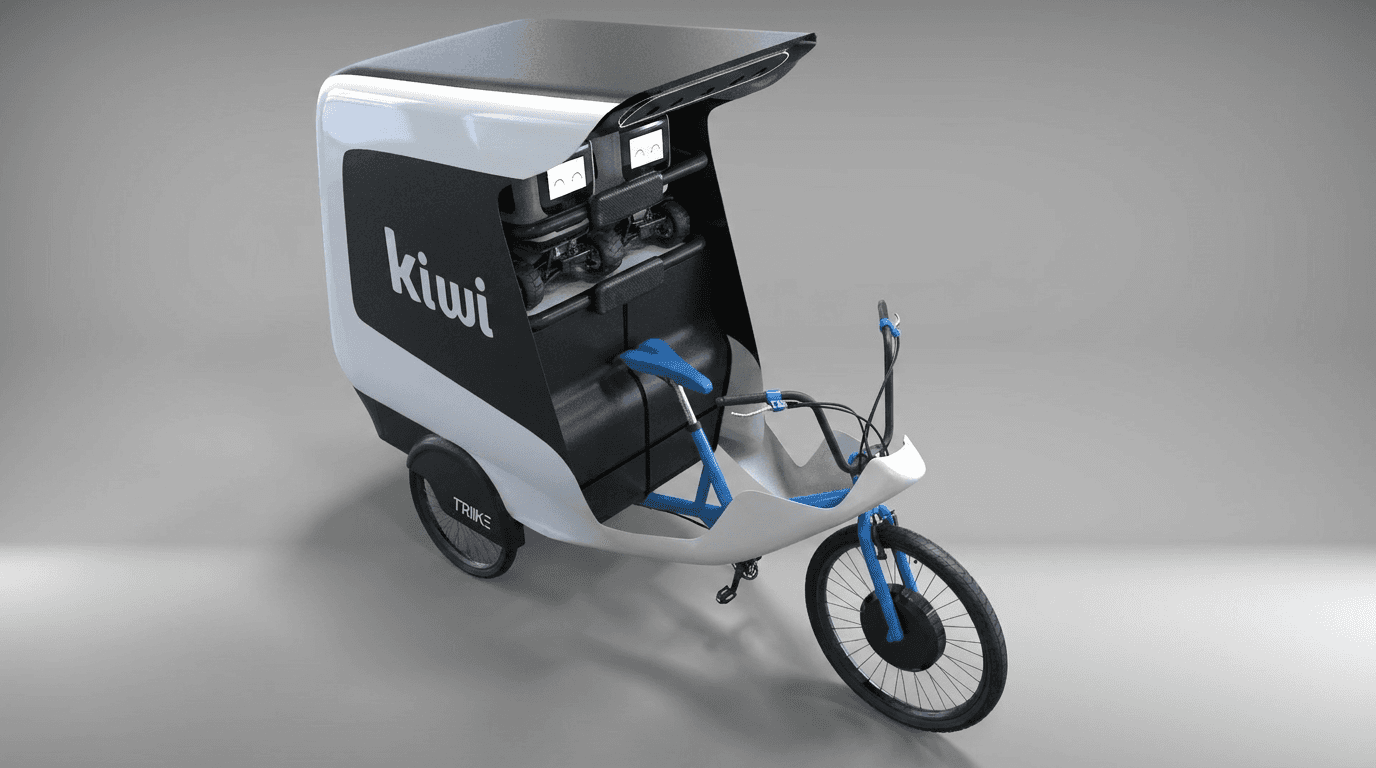
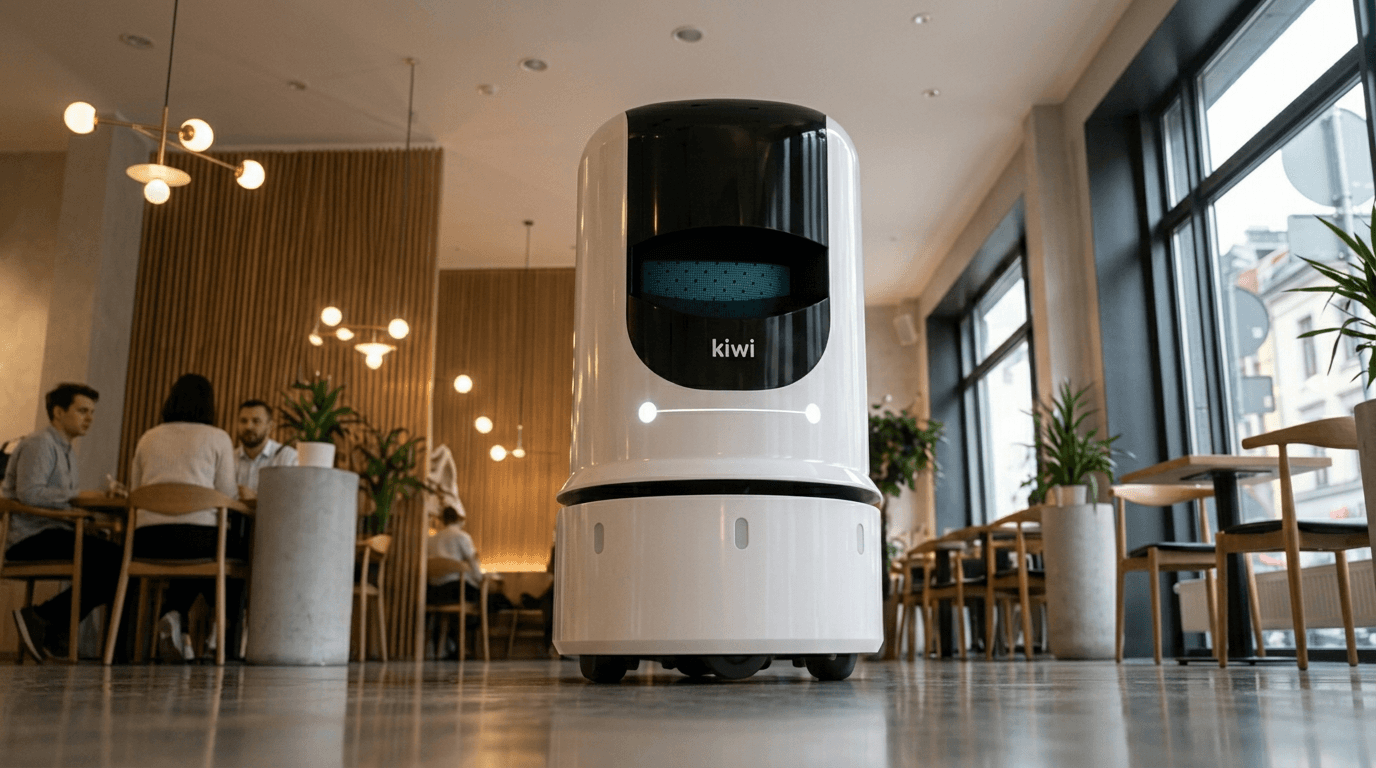
The project introduced two complementary robotic platforms working together. KiwiTrike handled fleet transportation and logistics across Berkeley, while RestaurantBot automated food movement inside and around restaurants, creating an integrated operational system supporting autonomous deliveries.
The project introduced two complementary robotic platforms working together. KiwiTrike handled fleet transportation and logistics across Berkeley, while RestaurantBot automated food movement inside and around restaurants, creating an integrated operational system supporting autonomous deliveries.
KiwiTrike functioned as a teleoperated logistics vehicle capable of transporting up to 12 Kiwibots, 20 spare batteries, and additional food storage shared with RestaurantBot. Meanwhile, RestaurantBot autonomously transported food between restaurant kitchens and pickup locations, assisting with robot loading and improving operational efficiency. Together, both platforms reduced manual work while increasing delivery throughput and fleet readiness.
KiwiTrike functioned as a teleoperated logistics vehicle capable of transporting up to 12 Kiwibots, 20 spare batteries, and additional food storage shared with RestaurantBot. Meanwhile, RestaurantBot autonomously transported food between restaurant kitchens and pickup locations, assisting with robot loading and improving operational efficiency. Together, both platforms reduced manual work while increasing delivery throughput and fleet readiness.


Autonomy Supporting Logistics
Both platforms combined autonomous navigation, teleoperation, and intelligent sensing technologies to coordinate fleet operations. Designed and engineered in Latin America before being deployed in California, they demonstrated an early vision of collaborative robotic ecosystems.
Both platforms combined autonomous navigation, teleoperation, and intelligent sensing technologies to coordinate fleet operations. Designed and engineered in Latin America before being deployed in California, they demonstrated an early vision of collaborative robotic ecosystems.
KiwiTrike used a teleoperated driving system developed by Juan Galvis, incorporating linear actuators for steering and motion control. RestaurantBot navigated autonomously inside restaurant environments using cameras, proximity sensors, and servo motors for precise movement and interaction. Together, both robots communicated operationally, enabling coordinated logistics between restaurants, fleet management, and delivery robots during proof-of-concept testing in Berkeley.
KiwiTrike used a teleoperated driving system developed by Juan Galvis, incorporating linear actuators for steering and motion control. RestaurantBot navigated autonomously inside restaurant environments using cameras, proximity sensors, and servo motors for precise movement and interaction. Together, both robots communicated operationally, enabling coordinated logistics between restaurants, fleet management, and delivery robots during proof-of-concept testing in Berkeley.




Built For Operations
Unlike traditional delivery robots, these platforms were designed specifically to support operational infrastructure. Their purpose was to optimize logistics, automate repetitive tasks, and create the physical backbone required for scaling autonomous delivery services.
Unlike traditional delivery robots, these platforms were designed specifically to support operational infrastructure. Their purpose was to optimize logistics, automate repetitive tasks, and create the physical backbone required for scaling autonomous delivery services.
RestaurantBot and KiwiTrike represented two complementary layers of the delivery ecosystem. One automated restaurant workflows while the other managed fleet transportation across campus. Designed, prototyped, and validated across Latin America and California, the platforms demonstrated how specialized robotics could improve efficiency beyond the customer-facing delivery experience.
RestaurantBot and KiwiTrike represented two complementary layers of the delivery ecosystem. One automated restaurant workflows while the other managed fleet transportation across campus. Designed, prototyped, and validated across Latin America and California, the platforms demonstrated how specialized robotics could improve efficiency beyond the customer-facing delivery experience.
RestaurantBot and KiwiTrike laid the operational foundation for many of the robotic systems developed in the following years. By addressing fleet logistics, restaurant automation, and infrastructure support, the project expanded Kiwibot's vision beyond last-mile delivery. It showcased the value of industrial design, robotics engineering, and systems thinking in creating scalable autonomous ecosystems that would influence future generations of Kiwibot products.
RestaurantBot and KiwiTrike laid the operational foundation for many of the robotic systems developed in the following years. By addressing fleet logistics, restaurant automation, and infrastructure support, the project expanded Kiwibot's vision beyond last-mile delivery. It showcased the value of industrial design, robotics engineering, and systems thinking in creating scalable autonomous ecosystems that would influence future generations of Kiwibot products.
RestaurantBot and KiwiTrike laid the operational foundation for many of the robotic systems developed in the following years. By addressing fleet logistics, restaurant automation, and infrastructure support, the project expanded Kiwibot's vision beyond last-mile delivery. It showcased the value of industrial design, robotics engineering, and systems thinking in creating scalable autonomous ecosystems that would influence future generations of Kiwibot products.
Head designer
Head designer
Alejandro Otálora
Alejandro Otálora
Team
Team
Juan Galvis, Andrés Rengifo
Juan Galvis, Andrés Rengifo
Company
Company
Kiwibot
Kiwibot
Kiwibot









2026 alot_design® Studio722
Let’s design.
Tell us about your vision—whether you're looking to develop next-generation mobility, autonomous robotics, or market-ready industrial products.


Let’s design.
Tell us about your vision—whether you're looking to develop next-generation mobility, autonomous robotics, or market-ready industrial products.
2026 alot_design® Studio722
Let’s design.
Tell us about your vision—whether you're looking to develop next-generation mobility, autonomous robotics, or market-ready industrial products.